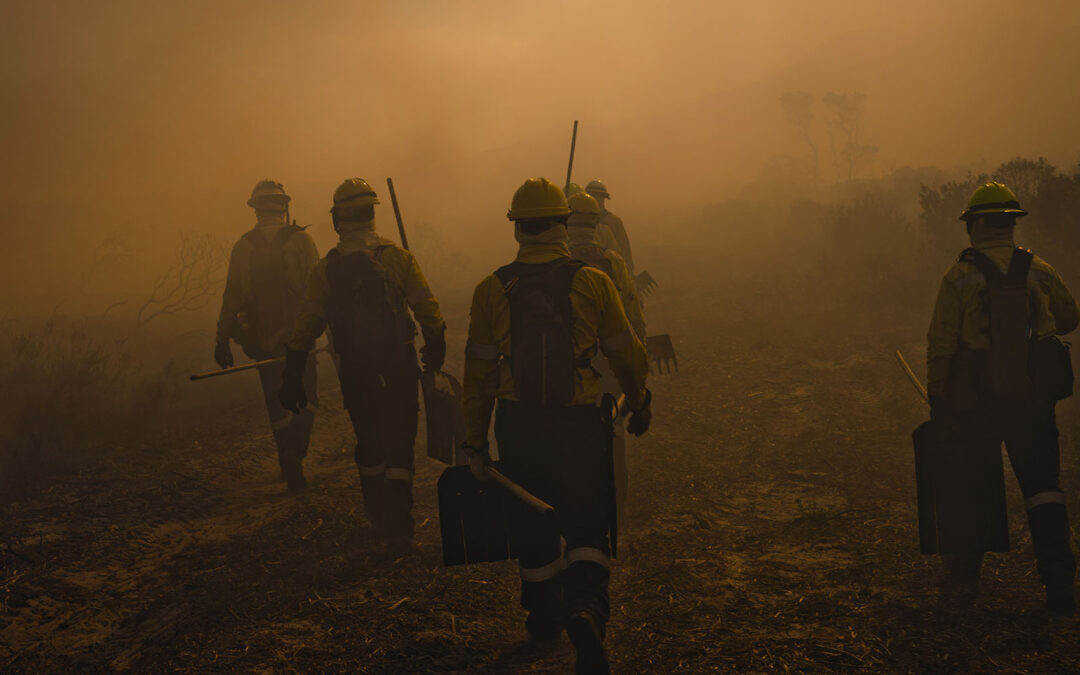
The Forest Service and other federal agencies have missed the deadline of Sept. 10, to implement President Donald J. Trump’s Executive Order (EO) 14308 mandating consolidation of federal firefighting into a single agency in the Department of Interior.
Citing “the devastation of the January 2025 Los Angeles wildfires,” Trump issued the order June 12, mandating that the five federal agencies with firefighting capabilities “consolidate their wildland fire programs to achieve the most efficient and effective use of wildland fire offices, coordinating bodies, programs, budgets, procurement processes, and research.”
Even though the deadline has come and gone with no implementation, budgets for the new fiscal year reflect the order, leaving Forest Service firefighters, about 80% of federal wildland firefighters, uncertain about their future paychecks.
Trump has already set back Forest Service fire mitigation and suppression efforts with a funding freeze for the work and by reducing the ranks of Forest Service firefighters through layoffs, firings, and buyouts. Now, Trump’s move to eliminate wildland fire duties from the Forest Service mission equates to a 55% budget cut.
Is there some advantage to consolidating firefighting efforts? “Nothing in this executive order is going to move that 98% needle,” FSEEE Executive Director Andy Stahl told the Daily Montanan, referring to the Forest Service’s impressive success rate for containing fires before they burn 100 acres.
As Associated Press journalist Michael Brown reports, “Organizations representing firefighters and former Forest Service officials say it would be costly to restructure firefighting efforts and cause major disruptions in the midst of fire season.” A letter from former Forest Service chiefs states that consolidating firefighting work could “increase the likelihood of more large catastrophic fires, putting more communities, firefighters and resources at risk.”