Located in northwestern Pennsylvania, the Allegheny is the state’s only national forest, established in 1923. The 514,029-acre Forest sits on the Allegheny Plateau and features:
- Two wilderness areas, Hickory Creek and Allegheny Islands.
- Two national scenic areas, Hearts Content and Tionesta.
- Two wild and scenic rivers, the Allegheny and the Clarion.
The Allegheny Plateau dates to the Paleozoic Era. (The southern reaches of the Plateau are known as the Cumberland Plateau.) “Regional uplift” caused the area to rise in elevation with little change to the topography. But precipitation over the ensuing hundreds of millions of years eroded parts of the Plateau into a rugged landscape of narrow valleys and gorges surrounded by steep ridges. In Pennsylvania, elevations in the Allegheny Plateau range from 1,750 to 3,000 feet above sea level.
In the 18th century, the forest in northwest Pennsylvania was mostly eastern hemlock and American beech. Black cherry accounted for less than one percent of the Plateau’s trees. This old-growth forest contained rich biodiversity and was characterized by large trees, fallen logs, and a multi-layered forest canopy. Today the region is known for black cherry, maple and other hardwoods, with the Allegheny National Forest providing a third of the world’s supply of black cherry furniture veneer.
Truly a “land of many uses,” the Allegheny offers a wide variety of recreation activities including: camping, motorized trail-riding, and snowmobiling. Paddlers enjoy the Allegheny and Clarion Wild and Scenic rivers, while the 12,000-acre Allegheny Reservoir welcomes motorized boating, camping, and fishing. Abundant wildlife provides hunting and viewing opportunities. The Forest’s many overlooks provide gorgeous views from around the forest, especially when deciduous tree leaves turn autumnal.
The Forest also includes roughly 2,000 oil-and-gas wells, thanks to a “split estate” in which subsurface mineral rights are not controlled by the landowner. Many of the wells have been abandoned, like the coal mines that predate federal management.
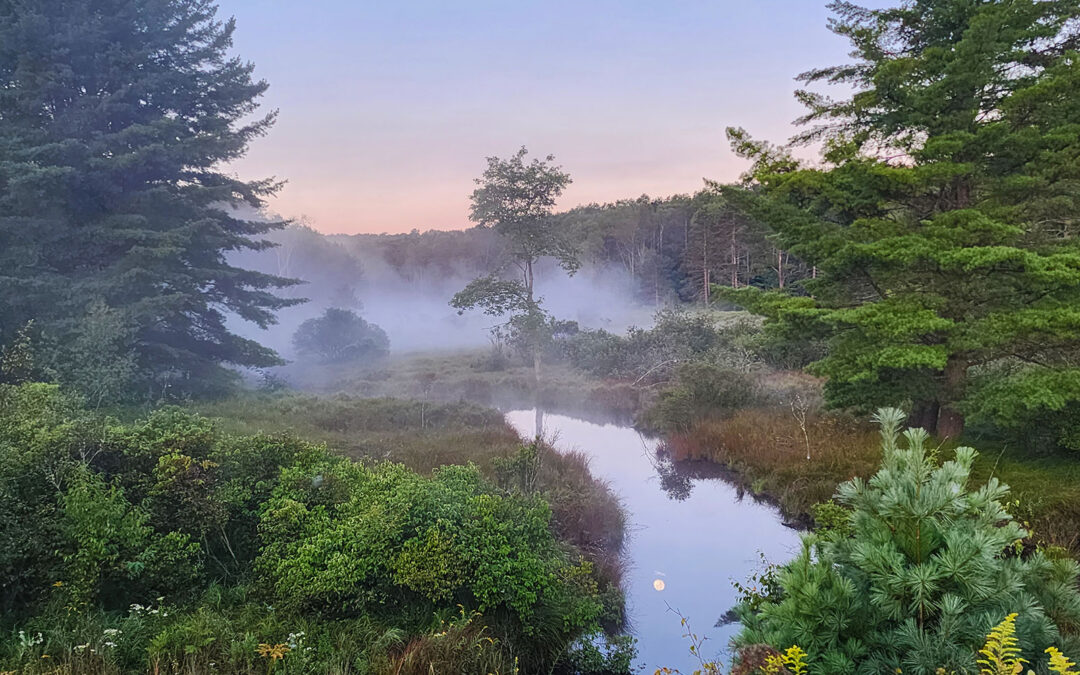
Photo: Still water reflects the moon on a misty morning at Beaver Meadows on the Allegheny National Forest (Forest Service photo by Kathleen Creek).