Kirsten Stade, reporting for Steady State Herald, recently spoke with FSEEE Executive Director Kevin Hood about the reorganization taking place within the U.S. Forest Service. The interview was part of a larger piece examining the Trump Administration’s restructuring of the agency.
The piece traces the administration’s plan to move Forest Service headquarters from Washington, D.C., to Salt Lake City, eliminate the nine regional offices that have anchored the agency’s governance since its founding, and route authority instead through 15 new State Director positions open to political appointment. Simultaneously, it grounds the current transition in the origin and evolution of the Forest Service over the past 150 years.
“The initial impetus for the creation of the Forest Service was the protection of waterways suffering rapid degradation through deforestation,” author Kirsten Stade reminds the reader. Although Forest Service land is managed for logging, mineral development, livestock grazing, conservation, and recreation, the agency’s “sustained-yield mandate” has required the agency to balance those needs sustainably. This also means the agency needed to hire staff with the expertise to do so.
Hood, a 30-year Forest Service veteran who spent much of his career in the agency’s Alaska Regional Office, describes the restructuring as part of a broader effort to assert political control over a workforce built on career expertise. “We’re going back to an early 19th-century political system of patronage and spoils characterized by incompetence, corruption, and chaos,” he says.
Stade connects the loss of regional offices, agency scientists, and career staff to a growing transfer of authority away from the federal government and toward states like Utah, which has signed a “shared stewardship agreement” giving it management authority over millions of acres of national forest land. “They’re looking to facilitate the liquidation of resources so they can privatize profit and socialize the cost,” Hood says. With the loss of agency science and professional staff, he adds, “agency officials can wheel and deal more freely, unbound by law or policy.”
The report closes on the same note FSEEE returns to often: public lands endure because the public defends them. “Public lands are a great equalizer,” Hood says. “Everyone owns them.”
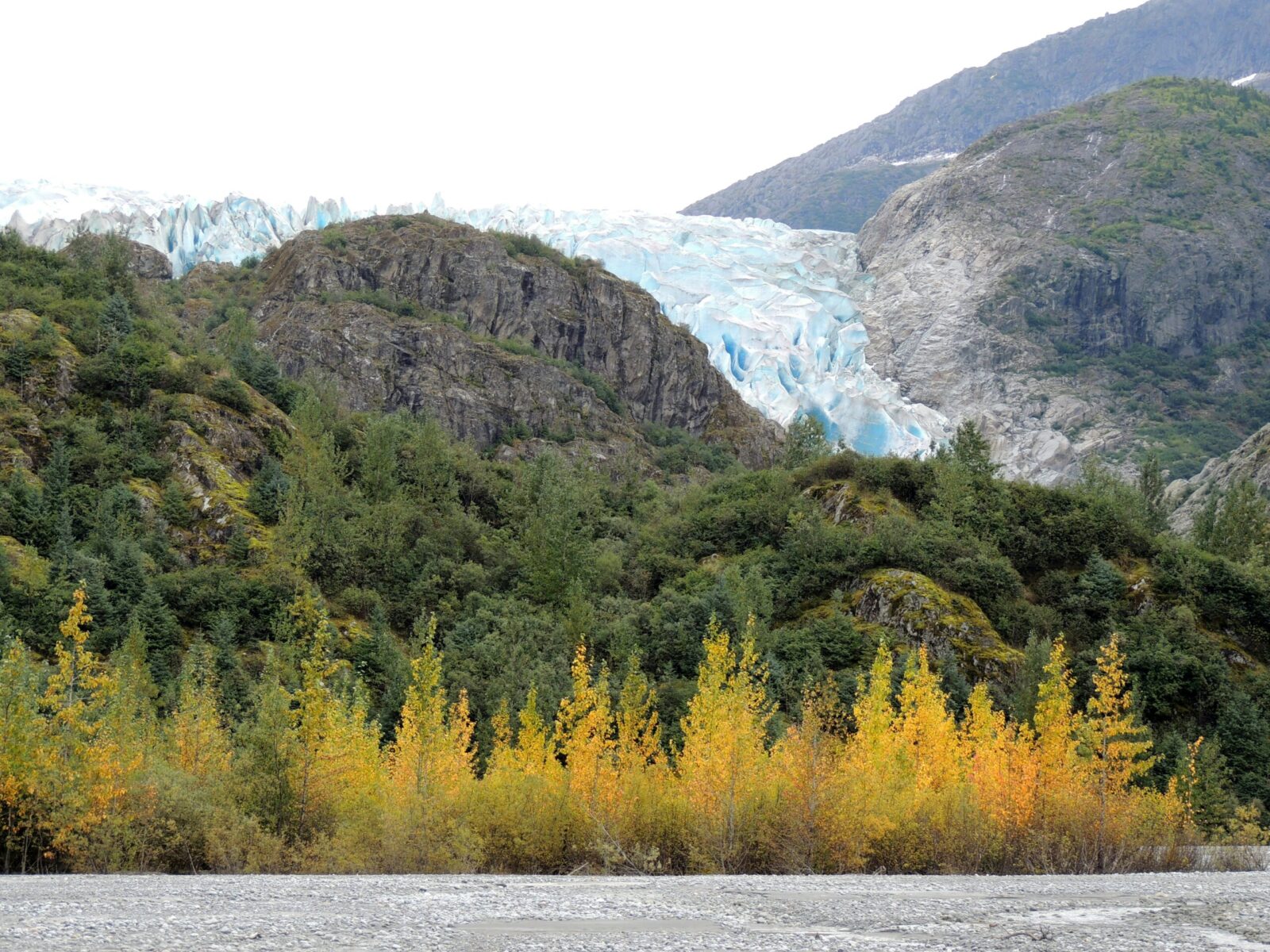
Photo: Herbert Glacier in Tongass National Forest (Southeast Alaska), the largest national forest in the country.