Regarded as “one of the most significant ecological crises facing land managers in the arid West,” invasive cheatgrass has increased fire frequency in the Great Basin from once every 30-70 years to every 3-10 years.
As Aldo Leopold observes in A Sand County Almanac, overgrazing livestock played a major role in the spread of this invasive weed:
“Today the honey-colored hills that flank the northwestern mountains derive their hue not from the rich and useful bunchgrass and wheatgrass which once covered them, but from the inferior cheat.… The cause of the substitution is overgrazing. When the too-great herds and flocks chewed and trampled the hide off the foothills, something had to cover the raw eroding earth. Cheat did.”
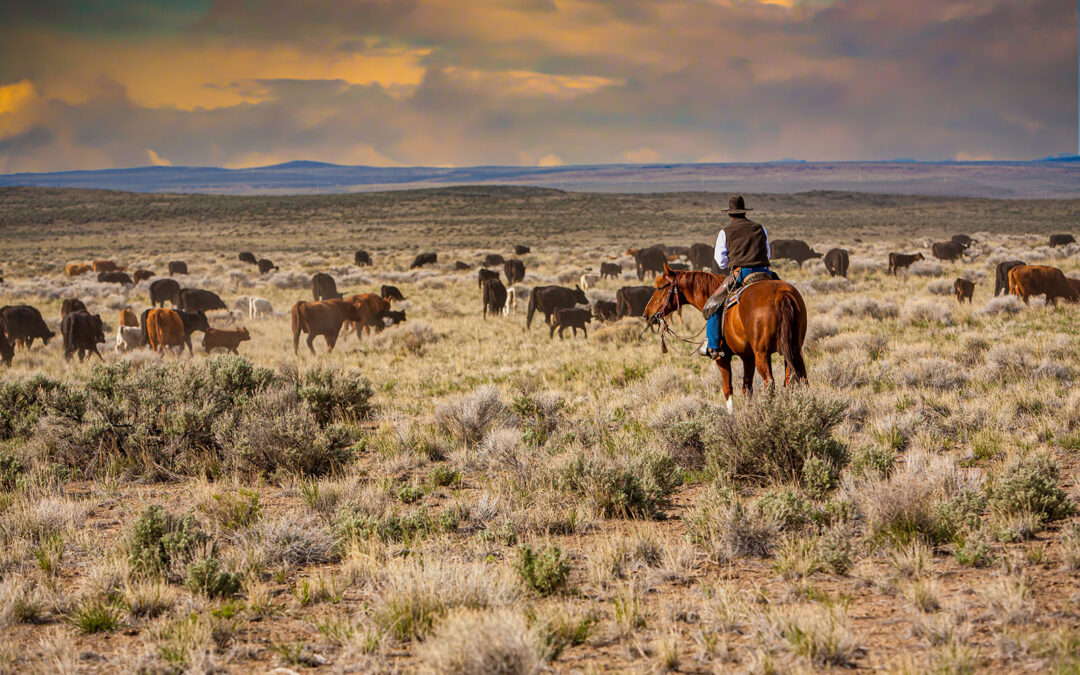
In an ironic twist, recent research indicates responsible cattle grazing may help mitigate the ecological damage of cheatgrass. One study shows “a nearly complete inhibition of germination” after cheatgrass seeds pass through the digestive tract of cattle.
Photo: Cattle grazing on native grasses and disturbing the ground encourages cheatgrass spread, but once cheatgrass is established, cattle can help mitigate the invasive weed.