
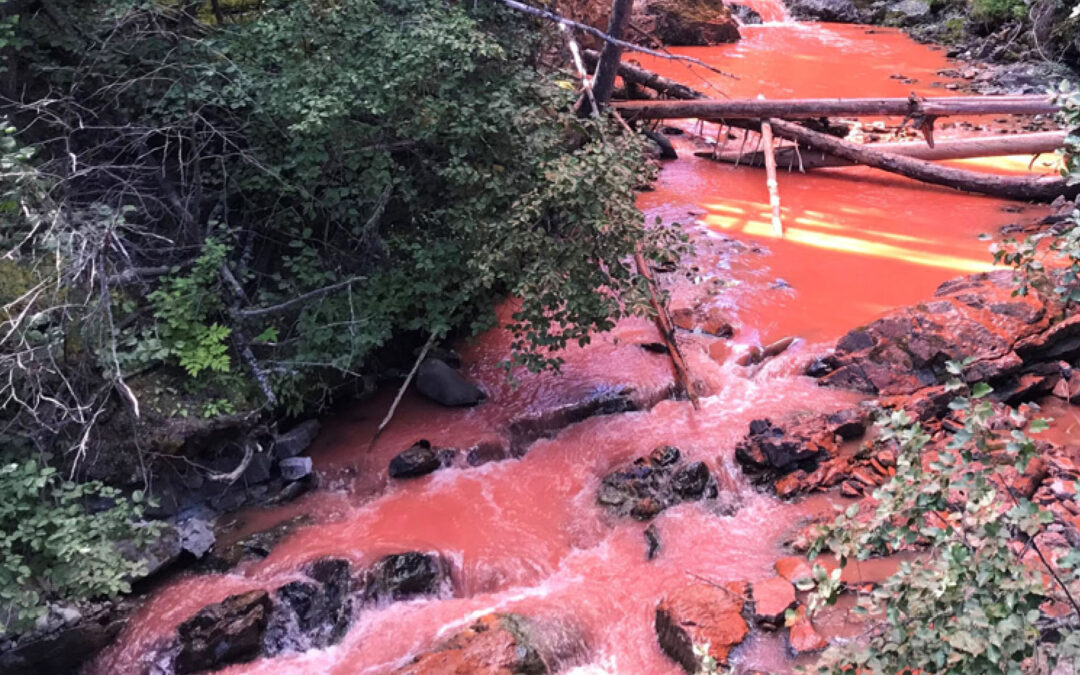
During the 2020 fire season, retardant-laden slurry bombers were scrambled to attack a small fire in Alberta’s mountains. One payload of Phos-Chek fire retardant was delivered directly into North Racehorse Creek, turning the stream red.
University of Alberta researchers with the Southern Rockies Watershed Project measured the impacts on the aquatic ecosystem just two weeks after the incident, sampling water at key points along the stream.
The samples showed 33% more phosphorus in the water where the retardant was dropped and 133% more a kilometer (0.6 mile) downstream compared to water samples collected upstream from the incident.
The research team returned a year later and took additional samples, which revealed 167% more phosphorus in the water 6 kilometers downstream with significant phosphorous remaining in stream sediments. The researchers’ recently published report focuses on phosphorous contamination and does not document the extent of retardant-induced heavy metals contamination nor the number of fish killed.
Photo: North Racehorse Creek in Alberta, Canada, runs red shortly after aerial fire retardant was dumped into it on Aug. 15, 2020 (Government of Alberta photo).