The Forest Service’s proposed rule (36 CFR 218) seeks to slash public participation to a degree we have never seen in the 50-year history of the National Environmental Policy Act (NEPA). Our voices are being systematically silenced.
Greatly Reduced Public Comment and Objection Periods
The agency is proposing to reduce public comment periods for Environmental Assessments (EAs) to a mere 10 days (down from 30 days), and for Environmental Impact Statements (EISs) to just 20 days (down from 45 days). People working full-time will have scant time to read the environmental review, conduct research and compose/submit comments. For town councils and federally recognized Tribes, the comment periods may open and close before a town meeting or tribal council can be called.
The ‘Contemporaneous Notification’ Trap
Giving people so little time to comment on public land proposals is bad enough, but an even worse trap lies in a new tactic called “Contemporaneous Notification.” Under this rule, for both EAs and EISs, the Forest Service can issue the environmental analysis and the draft decision simultaneously. This means that for a complex project — like a massive timber sale documented in a 300-page EIS — you would be given exactly 20 days to read the analysis, do your research, submit your comments, and file your formal legal objection all at once. And before receiving any public comments, the agency has already drafted its decision.
Misusing the Law to Silence the Public
The Forest Service claims these changes are compelled by the Fiscal Responsibility Act of 2023 (FRA). The FRA does establish new statutory limits for NEPA — including a one-year deadline for EAs and a two-year deadline for EISs. But the stated goals of the FRA — efficiency and timeliness — can be met without reducing public participation to a check-the-box exercise. The Forest Service can achieve FRA goals through:
- Better internal coordination.
- Focused prioritization.
- Smarter data management.
Instead, they are choosing to treat crucial public input as friction to be eliminated.
A Violation of Congressional Intent
These proposed changes violate the Administrative Procedure Act’s (APA’s) “meaningful participation” standard, which requires agencies to give the public a genuine opportunity to influence the outcome of a decision. These proposed changes also violate NEPA’s “hard look” requirement — the mandate that agencies must rigorously and honestly evaluate environmental consequences before acting. When an agency decides its course of action at the same time it releases its analysis, that “hard look” becomes a sham, designed to justify a predetermined outcome rather than hear citizen’s recommendations on how to best protect our national forests.
Elimination of Oversight
The Forest Service’s newly proposed rule would also eliminate oversight of the agency official signing the decision. Current protocol requires a higher-ranking official to consider and resolve objections to a decision. The new rule removes this independent review. At FSEEE, we are skeptical that the officials proposing the projects — whose performance will be evaluated by how actively they support timber, mineral, and energy interest groups — will provide fair reviews of concerns expressed by citizens.
Help FSEEE Fight This Assault on Democracy
We need your help to fight this disenfranchisement in the court of public opinion, in courts of law, and in the halls of Congress. Any contribution you can make — $25, $50, $100, or whatever you can contribute — will be used to fight for citizens’ rights to weigh in on how our national forests are managed and to insist upon responsible stewardship.
You can also help by commenting on the Forest Service’s proposed rule (36 CFR 218) through March 9:
- Click Here to go to the federal register notice for the proposed rule (RIN 0596-AD69).
- Click on “Submit a public comment” in the upper right corner.
- Let them hear what you think.
At Forest Service Employees for Environmental Ethics, we believe that our national forests are a shared trust. The American people must remain a part of — not apart from — stewardship of our public lands. Thank you for standing with FSEEE!
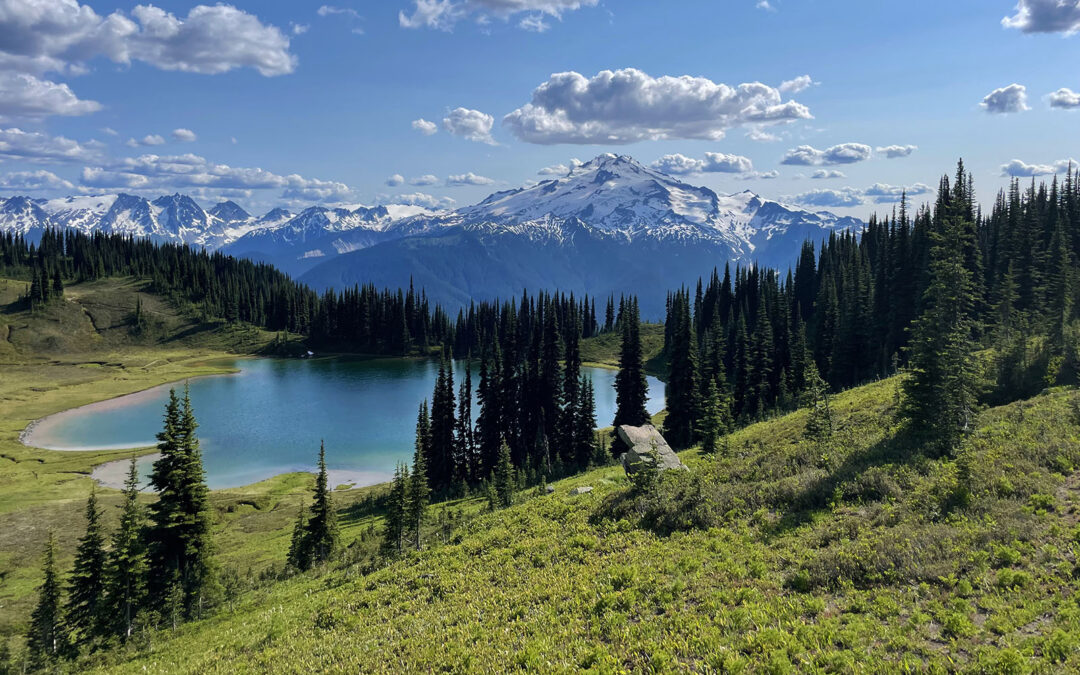
Photo: Advocacy by citizens and conservation groups played a key role in establishing the Glacier Peak Wilderness Area on the Mount Baker-Snoqaulmie National Forest.