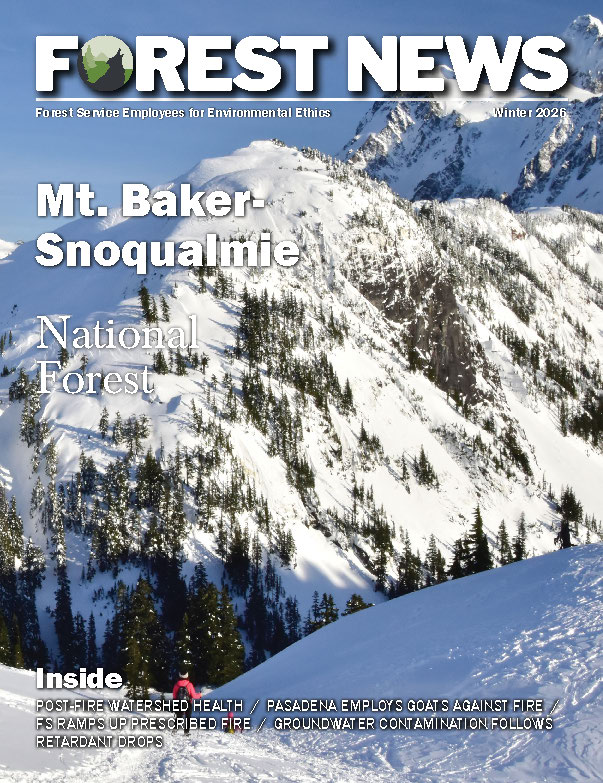

The administrative history of the Mount Baker-Snoqualmie National Forest is complex, including large multi-million acre forest reserves created in the late 1800s that were parceled in the 1900s into national parks (North Cascades and Rainier) and national forests (Mt. Baker, Snoqualmie, and Rainier). The Mt. Baker and Snoqualmie national forests, along with the northern part of Rainier National Forest, were ultimately consolidated into today’s 1.72 million-acre Mt. Baker-Snoqualmie National Forest.
When adjacent conservation areas are considered, the Mt. Baker-Snoqualmie National Forest is part of over 4 million acres of protected land extending from the Canadian border to Mount Rainier National Park. This complex supports recreation opportunities and conservation values unique to the Lower 48. The Forest offers world-class downhill-skiing and snowboarding opportunities at four resorts: Crystal Mountain, The Summit at Snoqualmie/Alpental, Stevens Pass, and Mount Baker Ski Area. The Forest also features seven “Sno-Parks,” winter recreation sites managed by Washington State Parks.
Beyond winter sports, visitors can enjoy hiking and backpacking along scenic sections of the Pacific Crest Trail, the Pacific Northwest National Scenic Trail and countless other trails. The Mt. Baker-Snoqualmie includes nine wilderness areas totaling 834,000 acres — almost half of the Forest. Daunting peaks of the North Cascades challenge climbers and mountaineers. A spectrum of landscapes — rugged high country, alpine lakes, dense forests, and lowland river deltas — provide a wide diversity of hunting and fishing opportunities. For recreational boating, the Forest offers Class V whitewater, mellow family outings, and everything in between.
A part of the largest contiguous conservation complex in the Lower 48, the Forest supports keystone species like grizzly bears and gray wolves as well as reclusive mammals such as Canada lynx and wolverines. The high country is home to mountain goats, hoary marmots, and pikas. The Skagit River hosts bull and steelhead trout as well as all five Pacific salmon species — pink, chum, coho, sockeye and king. Watersheds on the Mt. Baker-Snoqualmie National Forest support the water supply needs of the eastern Puget Sound. The old-growth forest sequesters carbon and contains some of the densest biomass on earth.