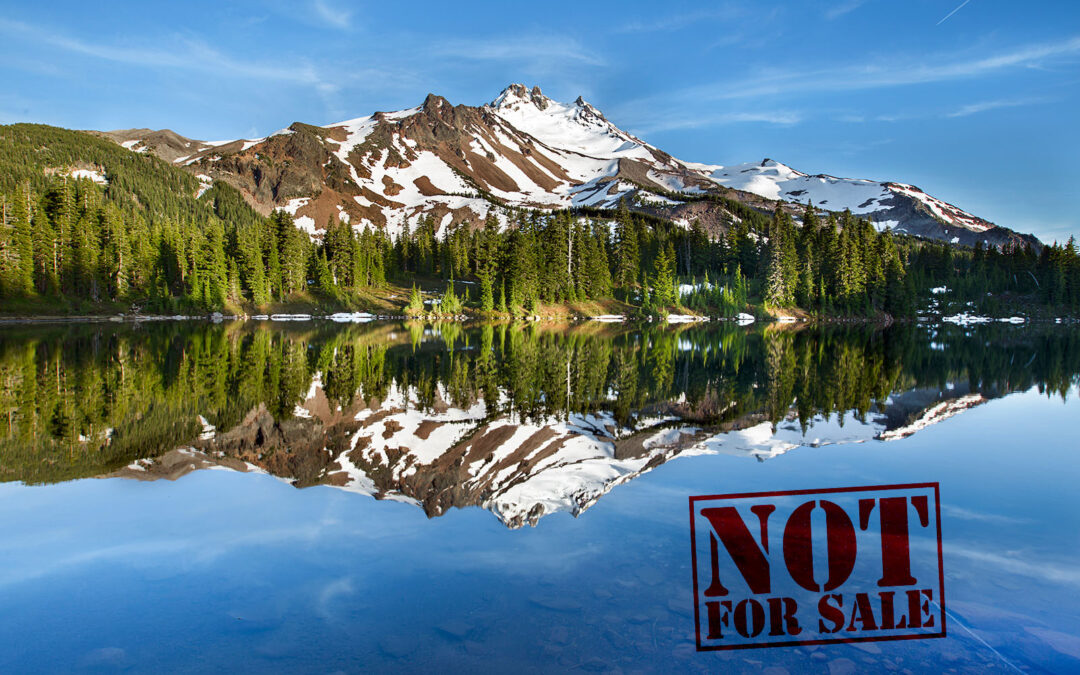
This year, the American people made their values unmistakably clear: our public lands are not for sale.
In an era when billionaires treat mountaintops like private playgrounds and corporations eye our forests for profit, one might wonder whether the notion of land held in common — open to all, stewarded for future generations — could still hold sway. It does. And it’s worth celebrating.
From New England’s town forests to the wildest corners of the Alaska outback, our public lands are a uniquely American idea. They’re not inherited from monarchs or reserved for the elite. They’re the birthright of every American — Native, immigrant, rich or poor, hunter or hiker, logger or treehugger. They’re where we go to work, to wander, to heal, and sometimes to fight.
So when privatization schemes rear their heads — whether wrapped in the flag of “local control” or buried in the fine print of budget riders — the backlash is swift. This year, grassroots campaigns, tribal nations, hunters, veterans, environmentalists, and public employees stood shoulder to shoulder in defense of public ownership. They reminded elected officials of an essential truth: selling off national forests, parks, refuges, or rangelands is not a policy debate. It’s a betrayal of the public trust.
Forest Service employees know this better than most. We have walked the contested ground. We’ve watched clear-cuts cross streams meant to be protected. We’ve reviewed permits that grant oil-and-gas firms more access than the public enjoys. And yet we return to work each day because we believe in the idea — even when the execution falters.
The idea is simple: the land belongs to all of us. The challenge, of course, lies in its implementation. Public ownership without public ethics invites abuse. Without transparency, accountability, and a moral compass, a national forest becomes just another commodity. But when land is managed with humility, science, and the public interest front and center, it becomes something extraordinary: a shared trust across generations.
In 2025, that trust was tested again. And once again, it held. Proposals to dispose of public acreage to balance budgets or curry favor with industry lobbyists were met with outrage. Public comments overflowed. Letters to the editor rang with passion. In some of our most conservative districts, people reminded their representatives: “Keep your hands off our land.”
This renewed defense of public lands is not partisan, nor is it nostalgic. It is pragmatic. Americans understand that, in a warming world with shrinking biodiversity and rising inequality, public lands are more vital than ever. They store carbon, safeguard drinking water, offer recreation to those who can’t afford ski resorts, and provide quiet to a noisy nation. You cannot put a price tag on that. Or rather — you can, but it would be theft.
So let’s take a moment to be grateful. Not complacent — grateful. Public land doesn’t protect itself. That job falls to us: the watchdogs, the whistleblowers, the quiet caretakers in boots and uniforms. It falls to those who draft NEPA documents with integrity, who mark trailheads instead of boundaries, who ask not how fast we can cut but how long we can sustain.
In this country, the land is not a prize to be won. It’s a promise to be kept. And in 2025, the American people kept it.