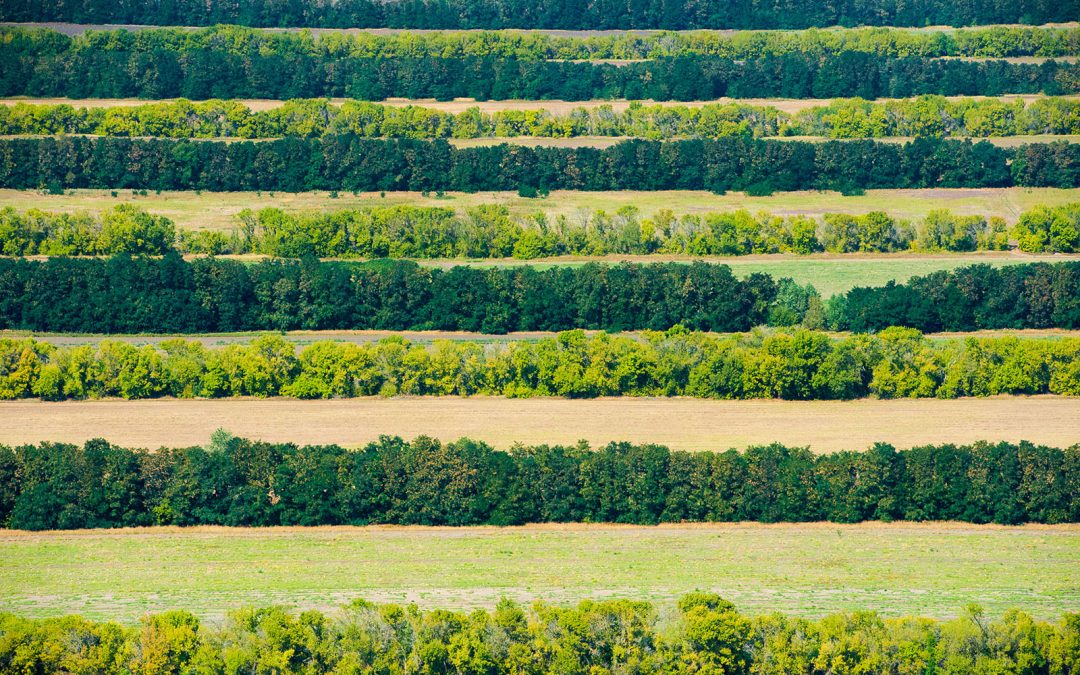
An Australian report published in August used fire-behavior modeling to compare fire spread and intensity across different vegetation types, moisture levels, and fire-weather conditions. The research team, led by Jady Smith, found that green firebreaks supported by irrigation significant;y reduce fire spread and intensity.
This study provides a “preliminary consideration of how vegetation type and irrigation influenced predicted fire spread and fireline intensity in a wildland-urban interface case study in southeast Queensland, Australia.”
The results reveal that dry conditions in eucalyptus ecosystems produced the most severe fire behavior. Less severe fire occurred with non-irrigated green firebreaks, and irrigated green firebreaks reduced fire spread and fire intensity “across all fire-weather classes.”
The researchers recommend additional research to validate their preliminary findings; nonetheless, the implications are that agricultural land and green belts could play a meaningful role in community wildfire protection.